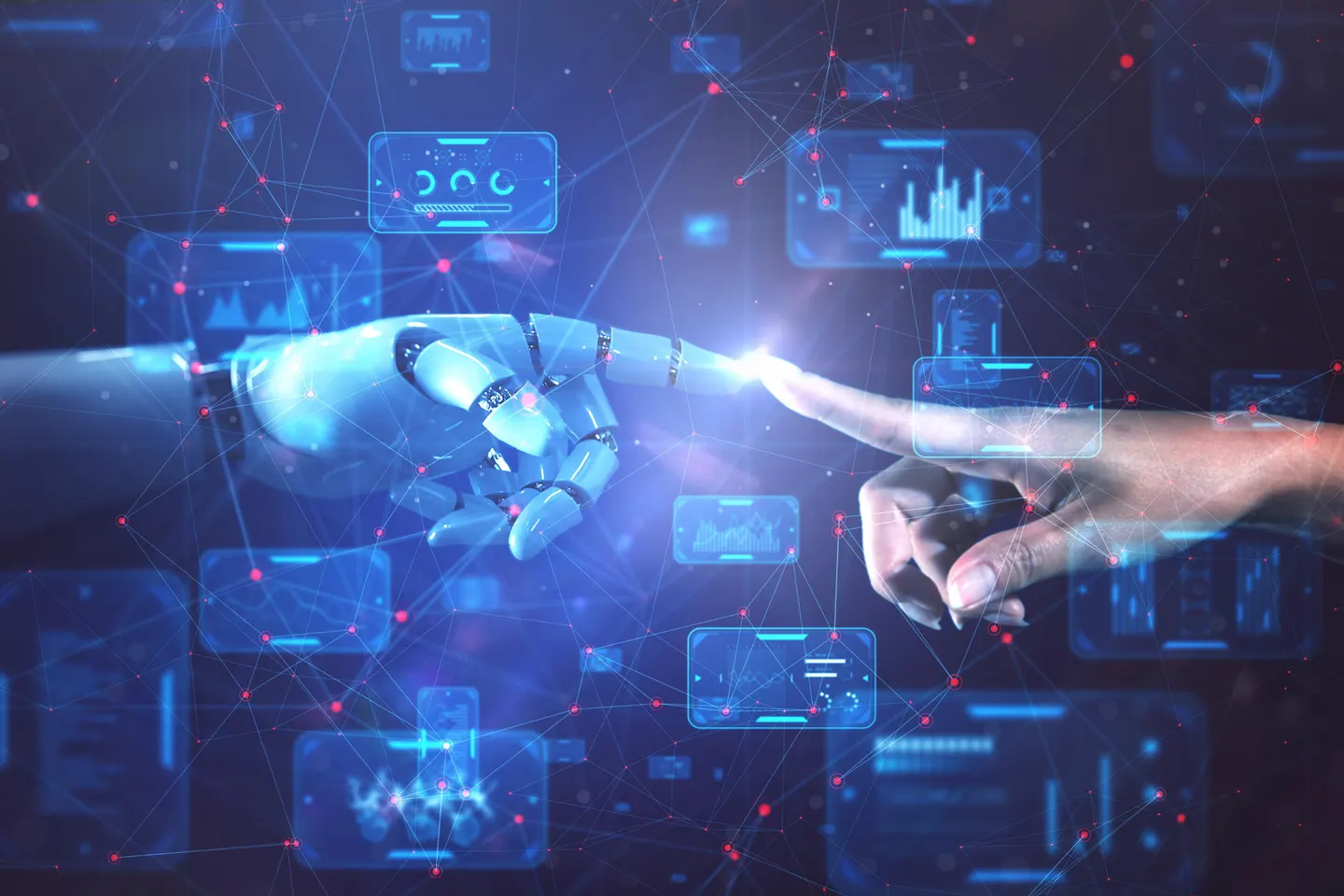
Touch has always been the part of digital life that refuses to travel well. Video can cross the country in a blink, audio can make a meeting feel close, but pressure, texture, and force still feel trapped inside the room where your hands are. Tactile Internet Technology aims to narrow that gap by sending control signals and haptic feedback fast enough that a person can feel and respond to something far away. For U.S. readers following connected technology trends, the real question is not whether this sounds futuristic. It is whether the network can move faster than the body notices. The idea rests on low network latency, dependable links, sensors, actuators, and edge systems close enough to cut delay. The ITU describes the field around low delay, high availability, reliability, and security, which explains why this is more than a faster video call. The promise is physical presence at a distance, but the path there is full of hard limits.
Why Tactile Internet Technology Feels Different From Video Calls
Most online tools send information to your eyes and ears. This one adds force. That changes the whole job of the network, because a delayed image may annoy you, while delayed resistance can make a robot arm slip, push too hard, or feel unsafe. A Zoom lag is awkward. A haptic lag can break trust in your hands.
The closest everyday comparison is not streaming. It is steering. When you turn a car wheel, you expect the road, tires, and vehicle to answer at once. Remote touch asks a network to join that same loop, which means the system has to carry intent, reaction, and correction without making the person feel separated from the task.
Remote Touch Sensation Depends on Timing, Not Hype
Remote touch sensation works only when action and reaction stay close together. You move your hand. A sensor reads the movement. A remote machine or virtual object reacts. A haptic device pushes back. Each step takes time, and the user feels the total delay as stiffness, wobble, or a strange rubber-band effect.
That is why research keeps coming back to millisecond-level timing. Some haptic systems aim for update rates around 1,000 times per second, because the body notices roughness when feedback arrives in slow chunks. Recent research on 6G-enabled applications describes tactile systems that need updates at 1 kHz for real-time haptic feedback, while future designs may push even higher.
The counterintuitive part is that speed alone is not enough. A connection that is fast nine times out of ten can still feel worse than a slightly slower one that behaves the same way every time. Your hand trusts rhythm. It does not trust surprise.
A gamer can accept a brief delay because the stakes are small. A welder guiding a remote tool cannot. A medical trainer showing a student how tissue resistance changes during a simulated procedure cannot rely on guesswork either. The feel has to arrive in a pattern the brain can read.
Haptic Feedback Turns Data Into Physical Judgment
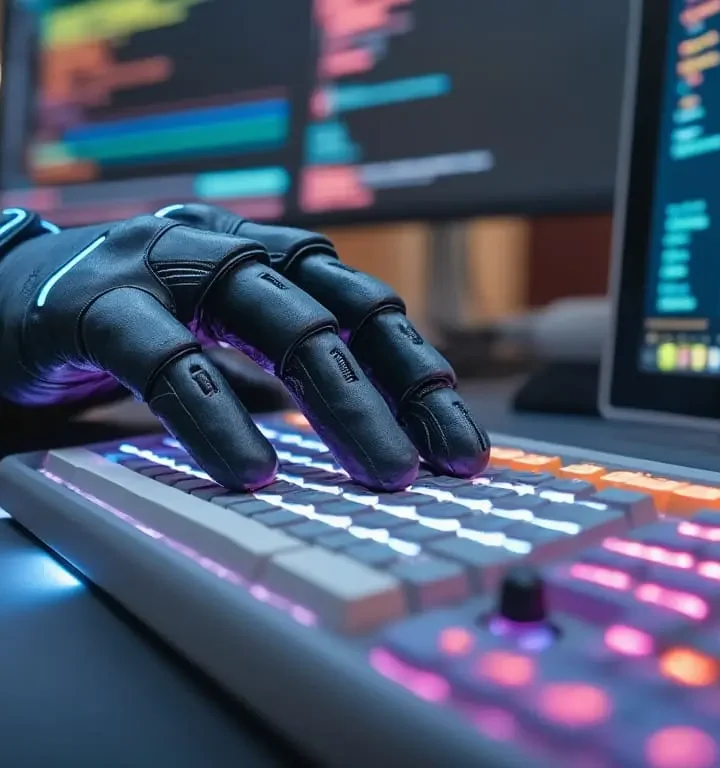
Haptic feedback is not a buzzword for vibration. In the strongest version, it carries clues about pressure, motion, grip, texture, and resistance. A surgeon guiding a tool, a factory technician moving a robot gripper, or a student wearing a training glove needs feedback that says, “too much,” “not enough,” or “you touched the edge.”
That is also why the device matters as much as the network. A cheap motor can buzz, but it cannot make a remote object feel heavy. A better glove or stylus may create pushback with motors, brakes, air pressure, or other actuators. The network delivers the signal, but the hardware translates it into feel.
A practical U.S. example is remote robotics training for community colleges tied to local manufacturing programs. A student in Ohio could guide a robot arm located at a partner plant, feel resistance through a desktop haptic controller, and learn safe motion before working near expensive equipment. The lesson is not about replacing local work. It is about letting scarce machines serve more people.
The human side gets missed in technical explainers. Touch is how people judge confidence. You know a drawer is stuck before you can name why. You know a screw is cross-threading before it strips. A remote system that carries those warnings can help people avoid costly mistakes.
The Network Has to Behave Like Part of the Hand
Once touch enters the picture, the network stops being a pipe and starts acting like part of the body. That sounds dramatic, but it is the right way to judge the system. A hand does not wait politely for a server. It probes, corrects, squeezes, relaxes, and adjusts in tiny bursts.
That demand changes network planning. Coverage maps are not enough. A system designer has to ask where the user stands, where the remote device sits, how traffic is routed, where compute happens, and what the machine does when packets arrive late. The answer often points to local edge nodes, private wireless networks, and tight device control.
Network Latency Is the First Wall Builders Hit
Network latency is the time lost while a signal travels, gets processed, and returns. For normal web pages, a delay may go unnoticed. For remote touch, the delay becomes part of the object. A soft ball can feel harder. A steady tool can feel shaky. A remote robot can feel like it is under water.
This is why edge computing matters. If every signal must travel from a clinic in Phoenix to a distant cloud data center and back, the trip may be too long for fine control. Moving compute closer to the user can cut delay. It also makes failures easier to contain because the control loop does not depend on a faraway server for every tiny correction.
The odd truth is that geography still matters in a digital system built to beat distance. Fiber routes, cell tower density, local edge nodes, and indoor wireless quality can shape the feel of a remote action. A New York hospital campus and a rural county clinic may both have broadband, but their haptic experience may not match.
Distance also hides inside buildings. A factory with metal racks, moving forklifts, and thick walls can create radio conditions that look fine on paper and feel poor during control. For that reason, serious deployments will test the whole path, from glove to access point to edge server to robot joint.
Reliability Matters More When Motion Can Cause Damage
A dropped video frame rarely hurts anyone. A dropped control packet can. That is why tactile systems need low delay and steady delivery at the same time. The ITU’s framing pairs low latency with availability, reliability, and security, because touch-based control is not safe when the link behaves like casual browsing.
Think about a warehouse robot in Dallas being supervised from a control room across town. If a stream pauses while the robot is near a shelf, the system needs a safe fallback. It might freeze, switch to local control, soften the grip, or hand off to an onboard safety routine. Good design assumes the network will fail at the worst possible moment.
This is where the non-obvious engineering shows up. The best remote touch system may not send every detail across the network. It may predict small motions locally, smooth a force signal, or let the remote machine handle safety while the human sends intent. Less data can sometimes feel more real when the timing is cleaner.
That idea can feel wrong at first. People assume perfect remote touch means sending more information. Often, it means sending the right information and letting local control handle the rest. The result can feel calmer, safer, and closer to the way your own hand filters noise before you notice it.
Where Americans May Meet Remote Touch First
Most people will not first meet this idea through a flashy headset. They will meet it through work, medicine, training, and accessibility. That is how many serious tools enter daily life in the United States. They start in places where the cost is easier to defend.
The pattern is familiar. GPS, voice recognition, and high-quality cameras all became normal after serious users proved their value. Remote touch may follow that same path. It will look plain at first, then slowly become part of tools people already understand.
Healthcare Will Move Slowly, and That Is Healthy
Remote surgery gets the headlines, but it is the hardest version of the problem. A surgical tool needs precision, trust, strict safety layers, trained staff on both ends, and a legal framework that can handle failure. So the first wider use in healthcare may be quieter: remote ultrasound guidance, physical therapy coaching, rehab devices, or specialist training.
Picture a stroke patient in a small Kansas town using a guided rehab device at a local clinic. A therapist in Kansas City can feel resistance as the patient moves, adjust a session, and spot fatigue before it turns into poor form. That is less dramatic than surgery, but it may reach more people sooner.
The non-obvious point is that touch may be more useful for assessment than action. A clinician does not always need to move a tool from far away. Sometimes they need to feel how a patient responds. That can turn haptic feedback into a diagnostic clue, not only a control feature.
U.S. healthcare also has a workforce problem that technology cannot solve with slogans. Rural clinics may lack specialists. Urban hospitals may have experts whose time is hard to stretch. A carefully designed touch link could help one expert support more sites, but it would still need local staff, clear protocols, and patient consent.
Factories, Training Labs, and Field Service Are Ready Sooner
Factories already use sensors, robotics, private wireless networks, and strict safety routines. That makes industrial sites a natural testing ground. A plant can control the building, the devices, the network, and the safety rules in a way a public street cannot.
A technician in Michigan could guide a robot to inspect a hot part, feel resistance through a haptic controller, and stay outside the danger zone. A training center in Texas could let new workers practice on a digital twin of a machine before touching the real one. A utility crew could let a remote expert feel tool pressure while a field worker handles the physical gear.
This is where how low-latency networks change smart devices becomes more than a consumer topic. Network latency shapes whether a remote action feels sharp enough to trust. When the delay is low and steady, a worker stops thinking about the link and starts thinking about the task.
The better business case may be boring, and that is a strength. Companies may pay for fewer damaged parts, faster training, less travel, and safer inspections before they pay for a futuristic demo. The first useful systems may look like industrial workstations, not science fiction.
The Standards and Hardware Still Have Hard Work Ahead
The dream is easy to describe. The system is not. Remote touch needs shared rules so devices from different makers can talk, compress signals, report capabilities, and handle failure. Without standards, every vendor builds a private island.
Standards work may feel far from the user, yet it decides whether the field grows or stalls. A hospital will not want one glove that works with only one robot. A school will not want a training rig that cannot connect to future devices. Interoperability is what turns prototypes into a market.
Haptic Codecs Decide What Touch Can Afford to Send
Video became common online because codecs made huge streams manageable. Touch needs its own version of that lesson. Haptic codecs can reduce the data needed for force, motion, and texture signals while keeping the feeling useful. IEEE 1918.1.1-2024 focuses on haptic codecs for kinesthetic and tactile signals, including metadata exchange between devices.
That sounds dry, but it matters. A glove, a stylus, and a robot arm may not share the same range of force or the same update rate. Before they exchange touch signals, they need to agree on what each side can create and understand. Otherwise, the user may receive feedback that feels wrong, weak, or unsafe.
The surprising lesson from media history applies here: compression is not only about shrinking data. It decides what the system treats as worth preserving. For touch, that choice may involve pressure edges, motion direction, vibration, stiffness, or sudden changes in force.
There is also a fairness angle. Better codecs can help lower-cost devices take part without flooding the network. That matters for U.S. schools, small clinics, and training centers that cannot buy the most expensive gear. A useful standard can widen access before the hardware becomes cheap.
Security Cannot Be Added After the Feeling Works
Security is not a side issue when the network controls motion. If someone tampers with a video stream, the result may be deception. If someone tampers with a haptic control stream, the result may be a machine moving the wrong way. That risk changes the design from the start.
A U.S. hospital, factory, or public safety agency will need authentication, encryption, access control, logs, and fail-safe behavior. The system also needs clear human cues. The operator should know whether they are in direct control, delayed control, simulated control, or emergency stop mode.
There is a hard trade-off here. Extra security checks can add delay, but weak security makes the system unacceptable. The answer is not to choose one side. It is to build secure paths close to the action, reduce unnecessary handoffs, and give local devices enough intelligence to stay safe when the connection weakens.
Regulation will trail the technology at times, so buyers will have to ask better questions. Who can take control? What happens when the link drops? Where is the data stored? Can the device prove what command was sent and when? In remote touch, paperwork becomes part of safety.
Conclusion
The next stage of digital connection will not be judged only by sharper screens or louder audio. It will be judged by whether distance still feels like distance when your hands are involved. That is a harder test than streaming a movie or joining a meeting, because touch exposes every delay and every weak link.
The promise of Tactile Internet Technology is not that every American will soon feel a remote object through a phone. The stronger promise is narrower and more useful: safer training, better remote support, smarter rehab, and machines that let experts act from farther away without losing judgment. That future depends on network latency, haptic feedback, device quality, standards, and security moving together.
The winners will be the builders who treat touch with respect. Not as a gimmick. Not as another screen trick. As a sense that needs timing, trust, and restraint. For deeper context on where connected systems may go next, explore future 6G use cases for American homes and workplaces and watch how the first serious deployments handle real people doing real work.
Frequently Asked Questions
How does remote touch work over a network?
Sensors capture motion, pressure, or position from one side, then send that data across a low-delay connection. A haptic device on the other side turns the signal into force, vibration, or resistance. The loop must stay fast enough that the user feels control.
Is this the same as virtual reality haptics?
No. VR haptics often create touch inside a simulated space, while remote touch can connect a person to a real robot, tool, or device far away. The two can overlap when VR visuals guide a remote physical action.
Why is low latency so hard for haptic feedback?
The body notices delay when touch and motion fall out of sync. A visual delay may feel annoying, but a touch delay can make an object feel unstable. The network, device, software, and wireless link all add small delays.
Will 5G be enough for remote touch sensation?
5G can support some low-delay use cases, especially in controlled private networks. Public mobile networks may vary by location, load, and coverage. The most demanding systems will likely need edge computing, careful device design, and future 6G improvements.
What industries will adopt this first?
Factories, medical training, remote maintenance, robotics labs, defense training, and rehab clinics are strong early candidates. They already have clear reasons to pay for safer remote control, better instruction, or access to expert help across distance.
Can consumers use this at home soon?
Simple haptic features will reach homes sooner than full remote force control. Game controllers, wearables, and training devices may add richer feedback first. High-risk uses, like remote machine operation, will remain in controlled settings longer.
What makes haptic codecs important?
They help reduce the amount of touch data sent across the network while keeping the feeling useful. That matters because force and motion feedback can require fast updates. Better codecs can lower strain on the network without ruining control.
What is the biggest barrier to real-world adoption?
Trust is the hardest barrier. The system must feel stable, stay secure, handle failures safely, and work across different devices. People will not accept remote touch for serious tasks unless the experience feels predictable under pressure.