

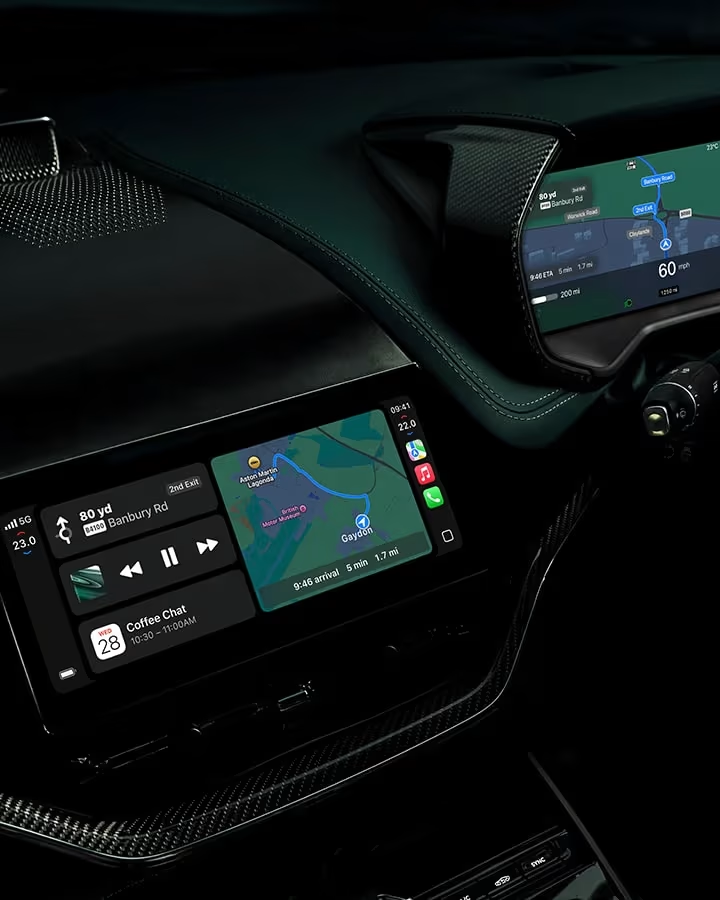
The dashboard used to belong to the automaker. That line is starting to blur. Apple CarPlay Ultra brings iPhone-style maps, media, widgets, gauges, climate controls, and vehicle settings into one deeper dashboard experience, starting with select Aston Martin models in the U.S. and Canada. It is not available across every brand yet, and that matters for American buyers who may be comparing a luxury SUV, a performance coupe, or a future Hyundai, Kia, or Genesis. For readers tracking connected-car news and auto technology updates, the real story is not a prettier screen. It is control. The system reaches beyond the center display and into the driver cluster, where speed, RPM, fuel, tire pressure, navigation, and warning alerts live. Apple says the first rollout began with Aston Martin, works with iPhone 12 or newer, and requires iOS 18.5 or later.
Apple CarPlay Ultra Features That Change the Whole Dashboard
Most people think the upgrade is about making the car feel more like an iPhone. That is only half true. The bigger shift is that Apple wants the phone and the car to stop fighting for screen space. Old CarPlay sat inside the infotainment system. This new setup reaches across the cabin, so the driver can see phone-based content and vehicle data in the same design language.
The instrument cluster is the real headline
The center screen gets attention because it is where you tap music, maps, and apps. Yet the driver display is where the trust test happens. When your speed, fuel level, gear, RPM, tire pressure, and warning messages appear through the same visual system as your navigation, the car feels less split in two.
That can be useful on a U.S. highway run. Say you are driving from Los Angeles to Las Vegas in an Aston Martin DBX707. You do not want Apple Maps on one screen, tire pressure on another, and climate settings buried in a native menu. You want the next turn, road speed, fuel range, and alerts in places your eyes already visit.
The non-obvious part is that this may make luxury dashboards feel calmer, not busier. More screen control sounds like more distraction. Done well, it can reduce the small mental jumps drivers make between two competing systems. Apple says the system can show iPhone information, vehicle information, driver-assistance data, and tire pressure in the instrument cluster.
Vehicle controls move into the same flow
The older CarPlay experience could feel like renting space inside someone else’s house. You could play music and run maps, but when you needed climate, radio, drive settings, or parking views, you often had to leave Apple’s interface. That break seems small until you do it every day.
Ultra changes that by letting drivers manage core car functions through the same screen flow. Aston Martin lists heating and ventilation, 3D camera views, advanced parking systems, audio settings, dynamic vehicle settings, and active safety systems as part of the deeper setup.
That is a big deal for brands with weak infotainment menus. The sharpest engine tune in the world cannot fix a clumsy climate screen. A driver who spends $200,000 on a grand tourer still gets annoyed when the seat fan takes four taps to find. Better software does not make the car faster. It makes the expensive parts easier to live with.
Which CarPlay Ultra Vehicles Are Confirmed So Far
The support list is where buyers need to slow down. Standard CarPlay works in hundreds of models, but the new Ultra system is not a simple app update for every vehicle. It needs deep work between Apple and the automaker because the system touches displays, gauges, safety messages, controls, and brand design. That is why the first wave is narrow.
Aston Martin CarPlay support came first
Aston Martin is the first brand with the live rollout. Apple says availability began in the U.S. and Canada for Aston Martin’s core model lineup, with new orders first and eligible existing vehicles with the brand’s newer infotainment system getting updates through dealers.
The practical takeaway is simple: if you want it now, look at new or eligible recent Aston Martin models, then confirm by VIN and dealer software status. Do not assume every used Aston Martin with regular CarPlay can run Ultra. The key filter is the newer infotainment hardware.
This is where “CarPlay Ultra vehicles” can become a messy search term. Some pages mix standard CarPlay support with Ultra support. Those are not the same thing. A 2025 Hyundai with regular CarPlay does not become an Ultra-ready car because Apple lists Hyundai as a future partner.
Hyundai, Kia, Genesis, and Porsche still need model clarity
Apple has publicly named Hyundai, Kia, and Genesis as brands working to bring the deeper system to drivers. That gives mainstream buyers a reason to pay attention, because those brands sell far more U.S. vehicles than Aston Martin.
Still, a brand commitment is not the same as a model, trim, price, and delivery date. Current reporting in 2026 points to Hyundai or Kia as likely next movers, but public model-level confirmation remains limited.
Porsche is the brand many Apple fans expected to see early, but the public path has been slower than the hype. That may sound odd because Porsche buyers are heavy Apple users. The friction is not taste. It is control. Automakers care deeply about the dashboard because it is where subscriptions, safety functions, brand identity, and service relationships now live.
Why Automakers Are Careful About Next-Generation CarPlay
The slow rollout is not a failure by itself. It shows how much the dashboard has changed. A modern cabin is no longer a radio, a screen, and a few buttons. It is the place where the car explains itself. Range, charging, lane support, drive modes, traction settings, camera views, audio tuning, and warning messages all pass through software.
Screen control is now brand control
For Apple, next-generation CarPlay is a cleaner driver experience. For automakers, it is a hard business choice. Letting Apple shape the gauge cluster can make the car easier to use, but it can also make the brand feel less visible at the exact moment drivers interact with it most.
Aston Martin solved that by blending Apple’s layout with Aston Martin design themes. Drivers can choose cluster themes, colors, wallpapers, and layouts that still feel tied to the car. Aston Martin also says media and wallpapers can flow across screens, while maps can extend into the driver display.
The quiet insight here is that Ultra may work best in premium cars first because those brands can treat software as part of the ownership ritual. A buyer sitting in a DB12 or Vanquish expects personalization. Gauge style, color, and theme choices feel natural there. In a mass-market commuter, the same feature has to prove it is useful before it feels worth the added cost.
Safety and trust matter more than screen beauty
A pretty interface can still be a bad driving tool. The cluster must show the right data at the right time, with no confusion about alerts. That is why this kind of rollout takes time. It is not the same as adding a weather widget to a phone.
Think about a tire pressure warning during a cold morning drive in Chicago. If the alert appears in the driver display, it has to be clear, fast, and tied to the car’s real sensor data. The driver cannot wonder whether the phone or the vehicle is in charge.
That is also why physical controls still matter. Apple says drivers can use onscreen controls, physical buttons, or Siri for many functions. The best version of this system will not force every task onto glass. It will let the driver pick the safest control for the moment.
What U.S. Buyers Should Check Before Paying for It
For American shoppers, the smart move is to treat Ultra as a model-specific feature, not a brand-wide promise. Ask the dealer direct questions. Ask whether the exact vehicle supports the full system, whether it is active at delivery, whether it needs a dealer update, and which iPhone and iOS version are required.
Do not confuse regular CarPlay with Ultra
Apple’s regular CarPlay model list is huge, and that can mislead buyers. Many cars support normal CarPlay for maps, music, calls, messages, and apps. Ultra is different because it reaches into the instrument cluster and vehicle systems. Apple’s regular CarPlay page still describes the familiar experience as a safer way to use iPhone on the built-in display, while the Ultra section explains that vehicle functions such as radio and temperature controls can be handled from CarPlay.
That difference matters at purchase time. A window sticker may say Apple CarPlay, but that does not prove Ultra support. Look for the exact name, ask for a live demo, and make the salesperson show the driver cluster, not only the center screen.
A good buyer test is simple. Can the system show maps in the driver display? Can it show vehicle data like fuel or tire pressure? Can it manage climate or radio without leaving the interface? If not, you are looking at standard CarPlay, not Ultra.
The best fit depends on how long you keep cars
If you lease every three years, waiting for broader support may make sense. Hyundai, Kia, and Genesis could bring this deeper system into more reachable price ranges, but buyers should wait for official model confirmation before planning around it.
If you buy and keep a vehicle for seven or eight years, software support matters even more. A dashboard that feels fresh today can feel old fast if the automaker stops improving it. Ultra may help because much of the app experience comes from the iPhone, but the vehicle side still depends on the carmaker.
For now, the most realistic advice is this: buy the car you like, then treat Ultra as a bonus unless the exact model has confirmed support. That keeps the feature in perspective. Great software can improve daily ownership, but it cannot rescue poor seats, weak visibility, bad dealer support, or a monthly payment that strains your budget. For broader buying research, pair this topic with new vehicle technology buying guides and smart infotainment comparison tips.
Conclusion
The dashboard is becoming the new battleground in the car business. Engines, batteries, and badges still matter, but software now shapes the first five minutes of every drive. The promise is a cabin that feels less divided, with maps, media, gauges, controls, and alerts working in one cleaner rhythm. That is why Apple CarPlay Ultra matters beyond Aston Martin owners. It shows where the industry is heading, even if support is still limited today. The smart buyer should separate confirmed vehicles from future promises, then ask better questions at the dealer. Look for the exact feature name, the right hardware, the correct iPhone requirement, and a real demo on the driver display. The winners will be the brands that make the screen feel helpful without making the car feel borrowed.
Frequently Asked Questions
Which vehicles support the new Ultra system right now?
Aston Martin is the only confirmed live rollout brand, starting with eligible core models in the U.S. and Canada. New orders came first, while some existing vehicles with the newer infotainment system can get dealer software updates.
Does regular CarPlay mean my car will get Ultra?
No. Standard CarPlay support does not mean a vehicle can run the deeper Ultra system. The newer setup needs specific vehicle hardware, screen support, automaker design work, and software integration beyond normal phone mirroring.
What iPhone do I need for the new system?
Apple says the system works with iPhone 12 or newer running iOS 18.5 or later. Older iPhones may still run normal CarPlay, but they are not listed for this deeper dashboard experience.
Are Hyundai, Kia, and Genesis getting support?
Apple has named Hyundai, Kia, and Genesis as committed future brands. Buyers should still wait for official model and trim details before assuming a specific Tucson, Telluride, IONIQ, EV9, or Genesis model will include it.
Is Porsche confirmed for the deeper interface?
Porsche has been linked to future support, but public model-level timing remains unclear. Buyers should check Porsche’s official build tools, dealer updates, and vehicle manuals before treating any 2026 model as confirmed.
Can older Aston Martin models be updated?
Some recent Aston Martin vehicles with the brand’s newer infotainment system may be eligible through dealer software updates. Older models with previous-generation hardware may still support standard CarPlay but not the full Ultra experience.
Why is the rollout taking so long?
The system touches more than the center screen. It has to work with gauges, safety alerts, climate controls, driver-assistance displays, brand themes, and physical controls. That level of integration takes automaker-by-automaker development.
Should I wait for more CarPlay Ultra vehicles before buying?
Wait only if dashboard software is a top buying factor for you. The feature is promising, but seat comfort, reliability, price, warranty, range, dealer service, and driving feel still matter more for most U.S. shoppers.