
A sensor does not need much power when it spends most of its life waiting. Piezoelectric Energy Harvesting turns pressure, strain, and vibration into tiny amounts of electricity, which can be enough for a device that measures, stores, sends, then goes back to sleep. That is why the idea matters for U.S. factories, bridges, warehouses, farms, and wearables where changing batteries is costly or annoying. For readers tracking practical technology shifts, the real story is not a magic power source. It is a better match between small energy and small jobs. A piezo element under stress can generate electrical energy, and vibration-based designs can tune a harvester to the motion around it. That makes the best uses narrow but useful: battery-free sensors, low-duty industrial monitors, and wireless sensor nodes placed where a technician should not need to climb, crawl, or shut down equipment every few months. For U.S. teams, the appeal is plain: fewer small service visits, fewer dead nodes, and better data from places that are easy to forget until something fails.
Why Piezoelectric Energy Harvesting Fits Sensors That Sleep Most of the Day
The first mistake people make is treating this technology like a tiny wall outlet. It is not that. It is closer to a rain barrel. You collect drips of energy from motion, store them, then spend them in short moments when the sensor has work to do. That rhythm is why the method belongs in sensor design more than consumer gadgets with screens, radios, and constant demand. The harvester does not remove the need for planning. It forces better planning. Every reading needs a purpose, and every transmission needs a reason. For a broader research background, a peer-reviewed Sensors review discusses how harvesters can support Internet of Things sensors in smart-city settings.
The trick is matching motion to small jobs
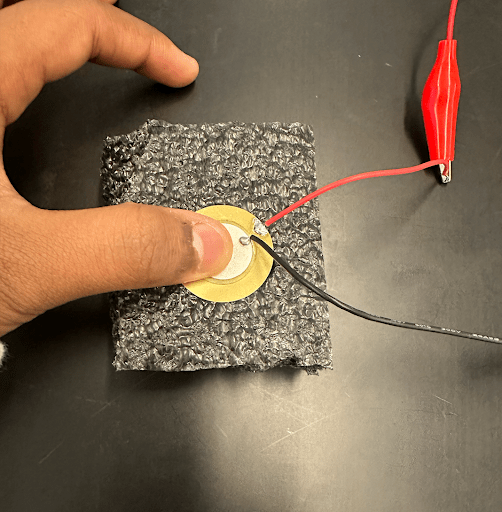
A piezo element creates charge when it bends, compresses, or vibrates. A bridge cable moving under traffic, a pump housing shaking in a plant, or a shoe insole flexing during a walk can all offer motion. The output is small, so the first design question is not “How much power can we make?” It is “What job can this sensor finish with the power available?”
That sounds limiting. It can be freeing. A temperature sensor on a motor may need to wake every five minutes, read a value, send a short packet, and sleep again. That pattern fits the energy world better than a device that needs to stream data all day. Analog Devices describes harvestable ambient power as often sitting in the tens of microwatts, which is why the power circuit has to gather energy and release it in bursts rather than feed a load nonstop.
The non-obvious part is that weak power can still create strong value. If a sensor prevents one unplanned shutdown at a Michigan auto supplier, nobody cares that its harvester only made a whisper of electricity. The win is in the signal, not the wattage.
That is a hard shift for buyers trained to compare battery size or runtime. Here, the better question is whether the device can catch the moment that matters. A sensor that wakes at the right time is worth more than one that talks all day and burns through power.
Where the power budget usually breaks
Most low-power sensor plans fail at the radio. Measuring temperature, vibration, strain, or humidity can be cheap in energy terms. Sending that data across a building or yard costs more. A wireless sensor node must save enough charge for the whole event, including wake-up, sensing, processing, transmission, and reset.
This is where good engineering looks boring from the outside. The storage capacitor, rectifier, converter, sleep current, and radio timing decide whether the system works. If the circuit leaks away energy while waiting, the harvester loses before the sensor wakes. If the radio sends too often, the power budget falls apart.
That is why battery-free sensors make sense when the message is short and the schedule is patient. A loading dock door counter can report openings. A rail bearing monitor can flag an abnormal vibration pattern. A smart building node can send air-quality snapshots. None of these needs to behave like a phone. The device has to be disciplined, almost stingy, with every pulse it spends.
This also changes the software mindset. The code should not ask, “What else can I do?” It should ask, “What can I skip safely?” That sounds plain, but it is the difference between a neat prototype and a field device that survives a cold week in a Chicago warehouse.
The U.S. Places Where Battery-Free Sensors Make the Most Sense
Once you stop chasing constant power, the best locations become obvious. The right place is not always the most high-tech place. It is the place where movement already exists and battery service hurts. That could be a rooftop HVAC unit in Phoenix, a highway bridge in Pennsylvania, a conveyor line in Ohio, or a refrigerated warehouse outside Dallas. In each case, the pain is practical. Someone has to reach the device, and that visit can cost more than the hardware.
Factories, bridges, and machines that already shake
Industrial equipment is one of the cleanest fits because machines often provide the exact input a piezo device wants: repeated vibration. Motors, fans, pumps, compressors, and gearboxes all create patterns. When those patterns change, maintenance teams want to know before a part fails.
A vibration energy harvesting setup can sit near the source, collect motion from the same machine it watches, and power low-rate checks. The beauty is not that the harvester creates much energy. It is that the sensor and the machine live on the same schedule. When the machine runs, energy is available. When it stops, the sensor may not need to report as often.
Civil infrastructure is harder but still promising. A bridge does not vibrate with the steady rhythm of a factory motor, but traffic creates strain events throughout the day. Engineers can place sensor packages on joints, beams, or cables to track patterns over time. A battery swap on a bridge may require lane closures, lifts, permits, and safety crews. That makes a small self-fed monitor more attractive than its power output suggests.
The same idea applies to freight and logistics. A sensor on a railcar or container may not have stable light, and a wired connection may be out of the question. Motion is one of the few local energy sources that follows the asset, which is why vibration energy harvesting keeps showing up in transport research and prototypes.
Wearables and medical patches need comfort before wattage
Wearables create a different challenge. A person moves, but not on command. A runner gives a shoe sensor plenty of motion. An office worker sitting through meetings does not. A medical patch has to be light, safe, soft, and forgettable. If the power layer makes it stiff or annoying, users remove it.
Recent work on low-power wearable circuits aims at systems that can process biomedical signals using energy taken from mechanical vibrations, with circuit design focused on tiny currents and stable output. That fits the direction of health monitoring, where a patch may only need to record a small reading or send a brief alert.
The counterintuitive lesson is that shoes may be easier than skin. A shoe can hide a firmer part, take repeated impacts, and accept a thicker package. Skin does not forgive that. So the path for wearables may start with sports gear, rehab tools, and worker-safety tags before it reaches thin medical patches people wear for days.
That path matters in the U.S. market because comfort decides repeat use. A warehouse safety tag that feels like a badge has a chance. A stiff patch that pulls at skin does not. The power system cannot be treated as a hidden engineering detail when the user can feel it.
For related coverage, a publisher could connect this topic to low-power wearable device design and smart factory sensor planning, because the same power limits show up in both worlds.
What Engineers Must Solve Before Batteries Disappear
The battery is annoying, but it is also dependable. It gives designers a known reserve. Removing it shifts pressure onto the harvester, the circuit, the storage part, and the software. The whole system has to behave like a careful spender in a town with irregular paychecks. That is why serious products will look less exciting than demos. They will be tuned to boring details: mounting location, vibration range, sleep current, packet size, and failure behavior.
Power circuits matter as much as the material
The piezo strip or disc gets the attention, yet the power-management circuit often decides success. A piezo source can produce high voltage with tiny current. Sensors and radios want stable voltage at the right moment. Between those two worlds sits the circuit that rectifies, stores, regulates, and protects.
Analog Devices points to the need for storage because peak load current can be higher than the piezo element can supply on its own. In plain English, the harvester may earn slowly, while the sensor spends in a burst. That gap is the design problem.
A good system may wait until a capacitor reaches a threshold, wake the sensor, take a reading, send data, and then shut down. A bad one wakes too soon and dies mid-message. That is why the phrase “battery-free” can hide a lot of unseen work. The battery disappears, but the discipline does not.
A good installer also has a role. Mount the harvester on the wrong panel, and the energy source may vanish. Put it on the vibrating bracket near the motor, and the same electronics may work for years. Placement is not a footnote. It is part of the power supply.
Lead-free materials are the quiet fight behind adoption
Many high-performing piezo materials have used lead-based ceramics. That is a problem for broad adoption, especially in consumer wearables, medical uses, schools, homes, and public infrastructure. A sensor meant to lower maintenance should not create a materials headache later.
Lead-free alternatives are improving, but they often trade some response for a cleaner material profile. Recent reviews describe the push toward safer piezo materials while noting that lead-free options can face lower responsiveness, which means the rest of the design has to work harder.
This is where the market may split. Heavy industrial monitors may accept certain sealed materials under strict rules. A child’s wearable, a hospital patch, or a home device will face a different bar. The winning designs will not be the ones with the flashiest lab demo. They will be the ones that balance output, safety, cost, and disposal without making the buyer nervous.
This is also where regulation, purchasing rules, and brand risk enter the room. A school district, hospital group, or city agency may reject a device that looks efficient on paper if its materials story feels weak. Cleaner materials can win deals even when the raw electrical output is lower.
How This Changes IoT Costs for Homes, Cities, and Industry
The usual IoT pitch talks about more data. That misses the bill people hate: maintenance. The savings case is not only about electricity. It is about truck rolls, ladders, downtime, and the quiet drag of small tasks repeated across thousands of devices. A city can afford a sensor. A factory can afford a sensor. What hurts is sending people back to service small devices, especially when the devices are hidden, high up, sealed, or spread across miles.
Maintenance savings beat headline power output
A battery has a price on the invoice, but the real cost lives in the visit. A technician has to find the unit, open it, test it, replace the cell, log the service, and sometimes shut down nearby equipment. In a warehouse with ceiling-mounted sensors, that may involve a lift. On a bridge, it can become a traffic problem.
That is why wireless sensor nodes powered by ambient motion can change the math. Even if the device costs more at purchase, it may win when it removes battery trips from the schedule. The advantage gets stronger as the site gets harder to reach.
There is a catch. Some places do not move enough. A quiet office wall may be a poor home for vibration energy harvesting, while a stair tread, pipe, door frame, or machine base may work. The best design starts with a motion audit, not a product catalog. You measure what the site gives before deciding what the sensor can promise.
That audit can be simple at first. Does the asset move daily? Is the motion steady, random, or tied to short events? Does the device need to report during motion, after motion, or during quiet periods? These questions stop teams from putting a clever harvester in a dead spot.
The smarter sensor is the one that knows when to stay asleep
Battery-powered devices often waste energy because they can. Battery-free design punishes that habit. The device has to choose silence most of the time. That means smarter wake rules, event-based sensing, and local filtering before data ever leaves the node.
A sensor on a factory pump does not need to send every vibration sample to the cloud. It can watch for a shift in pattern and report when the signal crosses a set limit. A stair sensor in a senior-care home can count steps or detect unusual activity without streaming raw motion all day. The local decision matters.
This is also the privacy angle people miss. Less data sent can mean less exposure. A sensor that reports “equipment state changed” or “foot traffic rose after 7 a.m.” may not need to send full traces. Power limits can push designers toward cleaner data habits. Constraint, handled well, becomes a guardrail.
The result may be a calmer IoT stack. Fewer messages, fewer battery tickets, fewer dashboards filled with noise. For many operations managers, that is the real upgrade: not more data, but data that arrives only when it earns attention.
Conclusion
The future of self-powered sensing will not arrive as one giant leap. It will show up in small devices placed where batteries make life harder than they should. The strongest use cases will be ordinary: machines that shake, structures that flex, shoes that bend, and sensors that only need to speak once in a while. Piezoelectric Energy Harvesting gives those devices a way to trade wasted motion for useful data, but it rewards restraint. Designers have to match the source, storage, circuit, radio, and schedule with care. For U.S. buyers, the smartest question is not whether the technology can replace every battery. It cannot. The better question is where a battery has become the weakest part of the job. Start there, and the value becomes clear. Choose the sensor that solves the service problem, not the one with the loudest promise. The strongest projects will begin with a site walk, a motion check, and a clear duty cycle. That is how a small stream of harvested energy turns into a sensor people can trust.
Frequently Asked Questions
How does a piezoelectric sensor make power without a battery?
It uses a material that creates electrical charge when bent, pressed, or vibrated. The charge is small, so the device usually stores it in a capacitor, then wakes for a short task such as measuring and sending a quick signal.
Are battery-free sensors ready for factories in the United States?
Yes, in select uses. They fit machines with steady vibration, short data messages, and costly battery service. They are not a drop-in answer for every device, but they can work well for condition checks on motors, pumps, conveyors, and fans.
What is the best use for vibration energy harvesting in IoT?
The best use is low-duty monitoring near a repeat motion source. A sensor on a motor base, rail part, pump housing, or door frame can collect motion from the same asset it watches, then report small status updates.
Can this technology power smart home devices?
Some smart home devices may fit, such as door sensors, floor-pressure sensors, switches, or appliance monitors. Always-on cameras, smart speakers, and displays need far more power, so they still need wired power or standard batteries.
Why do wireless sensor nodes still need storage parts?
The harvester gathers energy slowly, while the sensor may need a short burst for radio transmission. A capacitor or small storage part bridges that gap. Without storage, the node may wake and fail before finishing its message.
Is piezo power safe for wearable devices?
It can be safe when the material, packaging, and electronics meet the right standards. Wearables add comfort and skin-contact demands, so designs must avoid stiff shapes, unsafe materials, heat buildup, and parts that fail under sweat or motion.
How much electricity can a piezoelectric harvester produce?
Most small systems produce tiny amounts, often suitable for low-power sensing rather than constant electronics. Output depends on material, size, motion strength, circuit losses, and how often the device wakes. Site testing matters more than a lab number.
Will battery-free sensors replace normal batteries soon?
No. They will replace batteries in narrow places first, especially where service is expensive and energy demand is low. Standard batteries will stay common for devices needing steady power, long radio range, bright displays, or frequent communication.